Our aim
Our aim is to look beyond the technical processes involved in nuclear power, and in particular to examine how nuclear infrastructures are established in landscapes, how large they are, the activities associated with them, and the links between upstream and downstream nuclear research and production, both civil and military, drawing on sociology, history, geography, political science and law.
First event: New publishing season!
A debate and discussion on a recently published book dealing with the sociology of nuclear energy, with the author and several specialists in attendance.
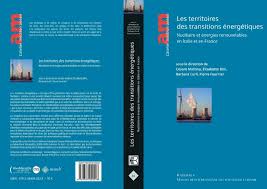
In 2023, the chosen book for this event was "Les territoires des transitions énergétiques. Nuclear and renewable energy in Italy and France". The book was presented by its 2 authors, followed by a discussion with historians, engineers, sociologists and physicists. A round-table discussion on interdisciplinarity rounded off the day.
Number of hours of doctoral training: 2 hours in October
Second event: Film screening on nuclear energy
Screening of a film focusing on a particular topic, followed by a debate and discussion.
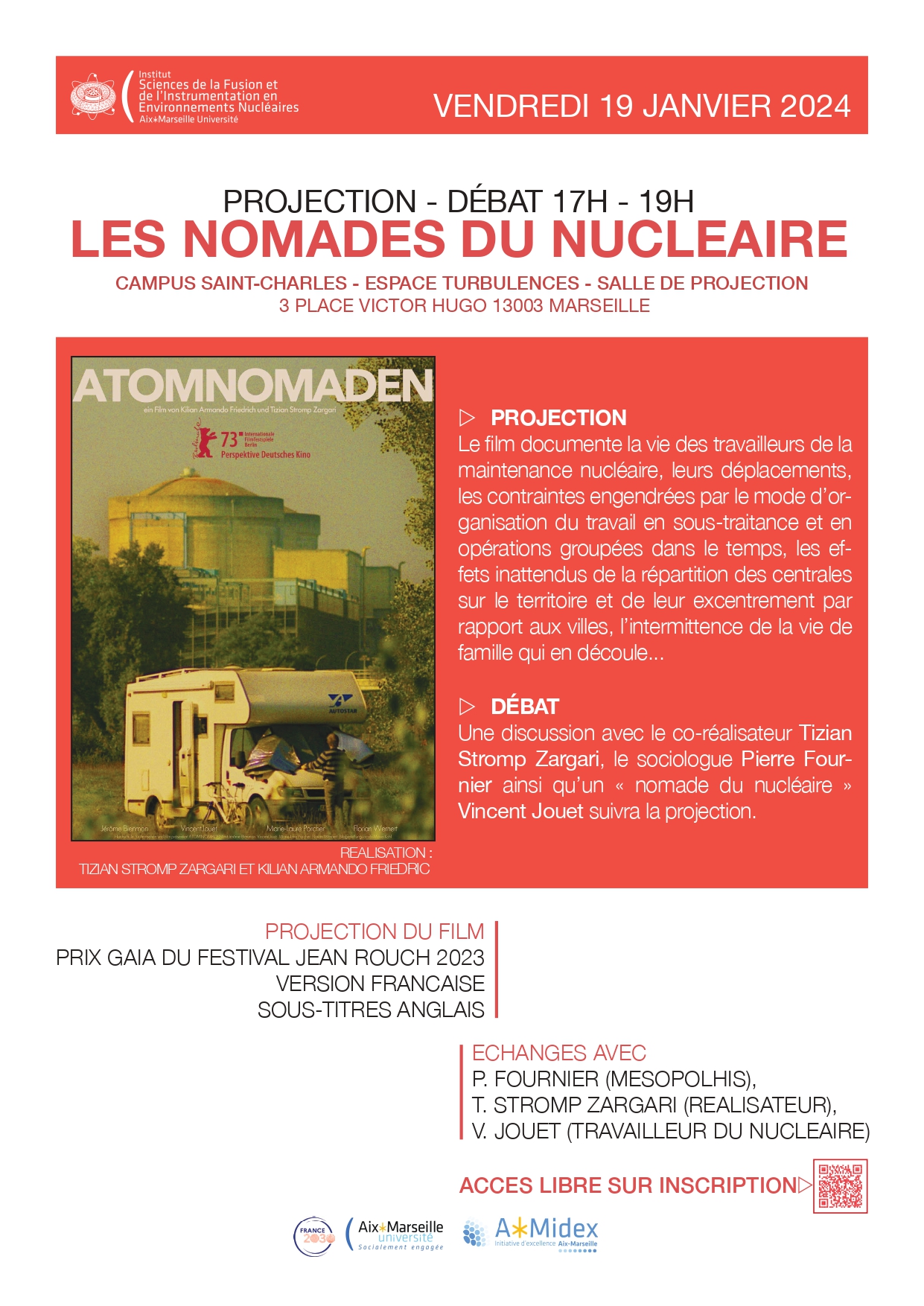
In 2023, the chosen film was"Nomades du nucléaire" (directed by Tizian Stromp Zargari and Kilian Armando Friedrich). The film presents the lives of nuclear maintenance workers, their travels, the constraints of working on subcontract and in staggered shifts, and the unexpected effects of maintenance activity.
The screening was followed by commentary and discussion with the director, 2 sociologists (Pierre Fournier and Cesare Mattina) and a nuclear nomad, Vincent Jouet.
Number of hours of doctoral training: 2 hours in October
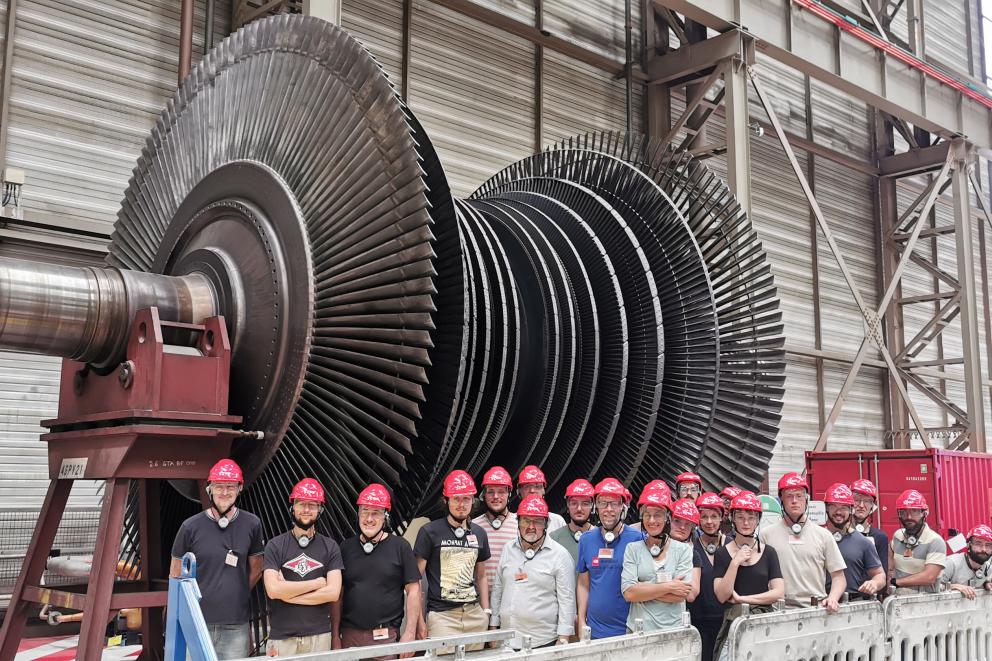
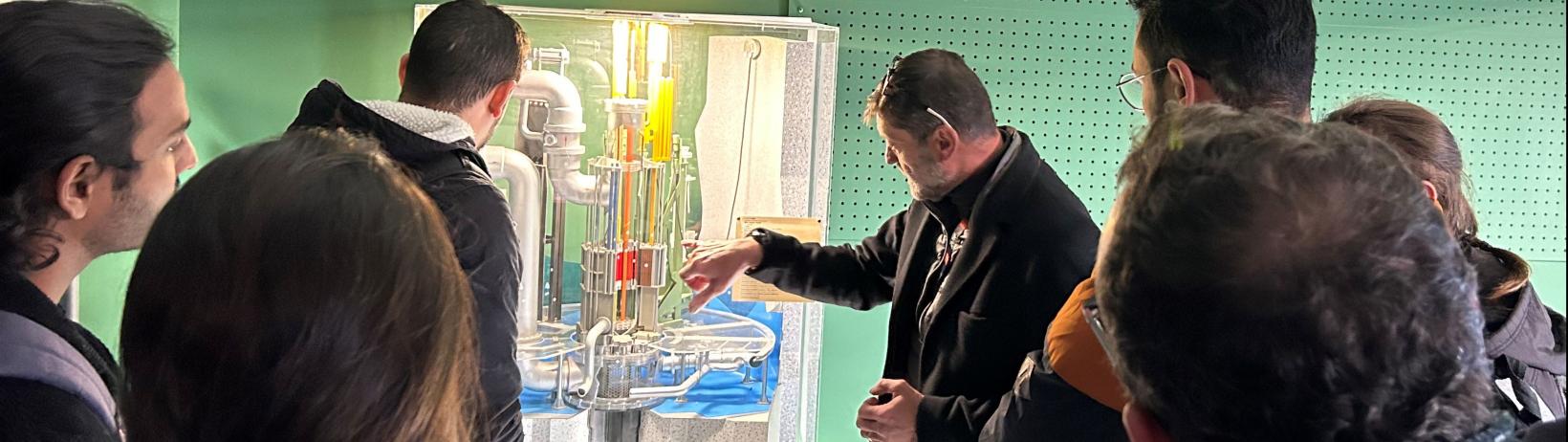
Third event: Annual visit to a nuclear site
These visits follow on from and complement the two previous events, and are commented on by a sociologist from the University of Aix-Marseille. Being able to visit these sites through the eyes of a sociologist enables us to gauge their impact on the area, on workers and residents, as well as their history.
There is a different site every year, on the basis of a 4-year cycle:
- Tricastin power plant
- Cadarache nuclear power plant
- Plateau d'Albion (former military nuclear site)
- Marcoule nuclear site
Number of hours of doctoral training: 6h in April-June