This master’s programme incorporates 5 courses that meet R&D and industry research needs:
- Industrial Instrumentation Engineering (3I)
- Instrumentation of Test Facilities (IME), jointly accredited with the CEA and the INSTN
- Microsensors and Detection Systems (MSD)
- Scientific Instrumentation Commercialisation (CIS)
- Instrumentation and Measurement Science for major Nuclear research facilities (IMSci-Nu) (introduced in October 2022)

CONTACT
Contact: first name.surname@univ-amu.fr
- Please contact the Instrumentation Division and visit its site.
- Michel Carette, overseeing Master’s and work-study programmes
- Christelle Carette, overseeing the IME and IMSci-Nu courses
- Khalifa Aguir, overseeing the Microsensors and Detection Systems course
- Régis Bisson and Philippe Pascal, overseeing first year students
Highlights of the first year of the Master’s in IMM
- Core curriculum comprising 575 hours of teaching
- Several training options:
- Training at the university followed by an internship in industry, in another university or in R&D
- Training with an apprenticeship or professional training contract: classes alternated with work in a company or a research unit (university laboratory, research centre, research organisation, etc.)
- Continuous training and validation of prior experience for employees or others returning to studies
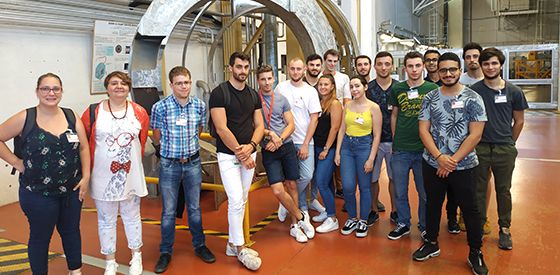
- An introductory research module in liaison with the LIMMEX laboratory (joint CEA, AMU and CNRS nuclear instrumentation laboratory) and with educational visits
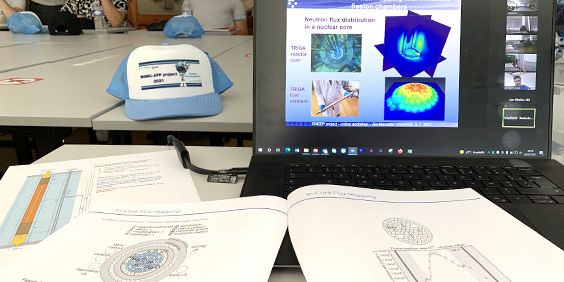
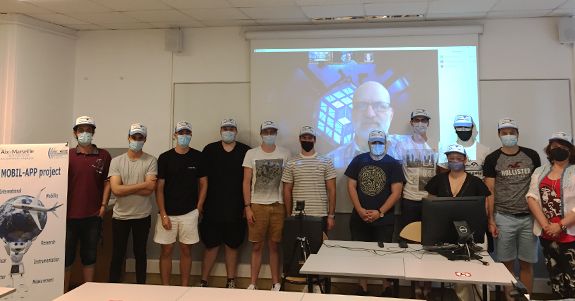
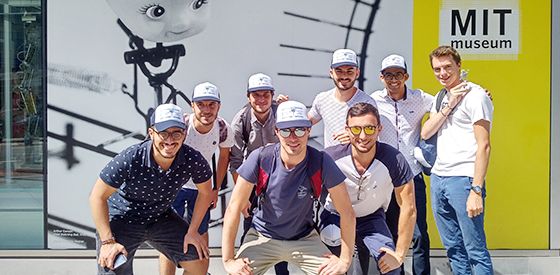
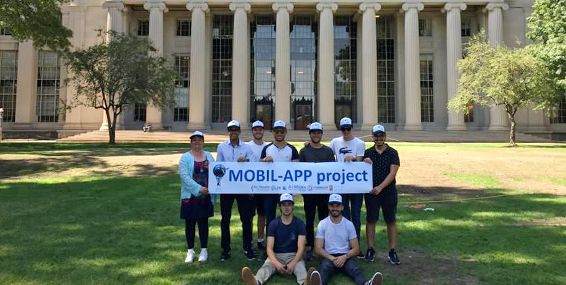
- The option (subject to selection) of a short international placement (MOBIL-APP) at one of the university’s partners in the nuclear field: Nuclear Reactor Laboratory at MIT, European nuclear centres (SCK-CEN, NCBJ, JSI), Moroccan nuclear centre CNESTEN
- Skills developed during work in a laboratory or a company as part of an internship or work-study programme.
Specific highlights of the IME course
- Jointly accredited with the INSTN (National institute for nuclear science and technology) and the CEA (French atomic energy commission)
- 710 teaching hours
- Several training options:
- Training at the university followed by an internship in industry, in another university or in R&D
- Training with an apprenticeship or professional training contract: classes alternated with work in a company or a research unit (university laboratory, research centre, research organisation, etc.)
- Continuous training and validation of prior experience for employees or others returning to studies
- ISO-9001 quality certification
- Internship grants funded through a partnership agreement with EDF
- Attendance (subject to selection) at the French-Moroccan school EFMMIN
- A very high employment rate for alumni (statistics reviewed 6 months, 18 months and 30 months after graduation)
- Direct professional integration or continuation to PhD thesis
- A directory of Instrumentation Division alumni
Specific highlights of the international IMSci-Nu degree
- A number of international and national partners with many research facilities and recognised expertise in the fields of nuclear fission and fusion
- One year of training with 340 teaching hours (in English)
- A comprehensive course with:
- A high level of teaching
- Seminars delivered by renowned international scientists and experts: IMSci-Nu school
- Research project completed with the support of the ISFIN laboratories
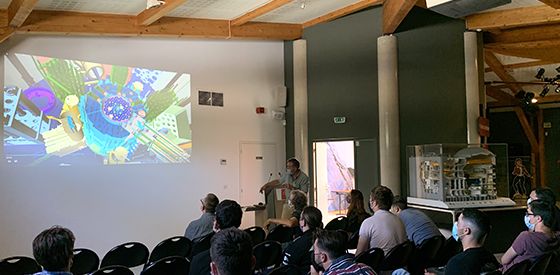
- Visits to facilities (in person or remotely) in France and abroad
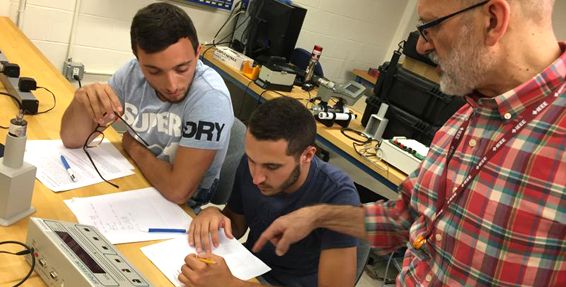
- Practical activities (real-time and TP mock-ups at large facilities)
- Intercultural and communication cross-disciplinary teaching
- Four to six-month internship at major international facilities abroad or in France
- An ISO-9001 quality-certified diploma
- Incoming mobility grants (€1,000 per month * 10 months)
- Direct professional integration into a PhD programme or in research and development
- Access to the directory of Instrumentation programme alumni